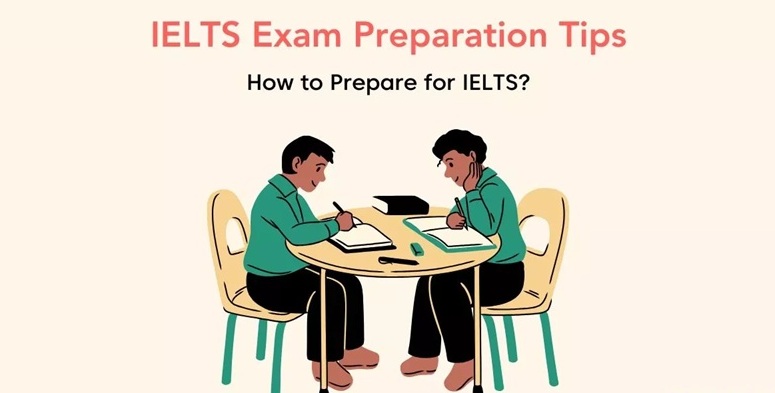
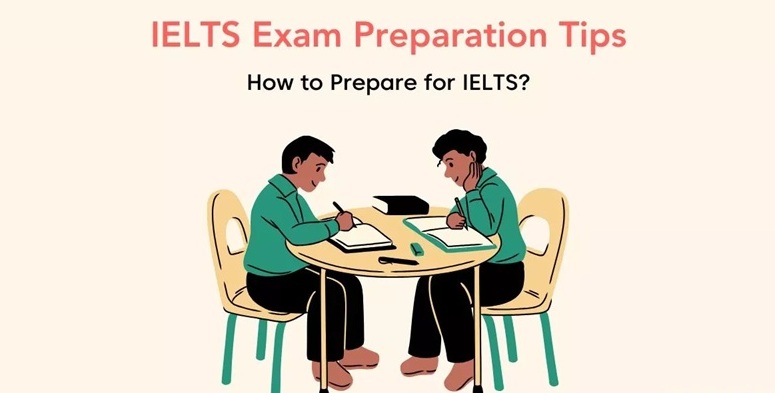
How to Get a High Score in IELTS in One Month?
Wondering how to get a high score in IELTS in one month? With the right strategy, and practice schedule, passing IELTS in 30 days is possible. This guide provides expert tips, daily plans, and proven techniques to boost your band score fast.
Enrol at the IELTS Preparation Centre in Sydney and learn how to achieve your IELTS grade with native speaking examiners as your teachers.
The International English Language Testing System (IELTS) is a globally recognized English proficiency test, essential for candidates planning to work, study, or immigrate to English-speaking countries. With four key components, Listening, Reading, Writing, and Speaking, the test is scored on a band scale of 1 to 9.
Many aspirants ask: “Can I Get a High Score in IELTS in One Month?” The answer is yes, if you already have a reasonable command of English and follow a focused and structured study plan tailored to the test format.
Why You Need a One-Month IELTS Study Plan?
A one-month study plan for the IELTS exam can help maximize your time and target your weak areas efficiently. It ensures structured preparation even when you’re on a tight schedule.
- Managing limited prep time effectively
- Identifying strengths and weaknesses early
- Focusing efforts on weaker areas
- Building familiarity with exam patterns and question types
Even if you’re short on time, structured daily practice and efficient time management can help you reach your target band score.
Is One Month Enough to pass the IELTS?
If your current proficiency is around Band 6.0 or above, one month of intensive preparation can significantly improve your score. However, if you’re starting from Band 5.0 or below, it may take more time to improve your general English level before aiming for a high band.
That said, a dedicated one-month strategy with 4–6 hours of study per day can help most candidates reach Band 7.0+, especially with guided preparation.
30-Day IELTS Preparation Plan
Here’s a breakdown of your four-week plan to strengthen all IELTS skills. Focus on mastering strategies, building stamina, and improving your weak points each week.
Week 1: Foundation Building
- Understand the test format
- Take a diagnostic mock test to assess your level
- Focus: Vocabulary building (10 words/day), basic grammar revision
- Practice 1 Listening + 1 Reading section per day
Week 2: Skill Development
- Focus on weakest skills first
- Start Writing Task 1 (Graphs, Charts, Process) and Task 2 (Opinion Essays)
- Record yourself speaking on common topics (2 mins each)
Week 3: Practice Under Exam Conditions
- Take full-length mock tests (alternate days)
- Time yourself strictly for each section
- Focus on reviewing mistakes
- Learn exam strategies
Week 4: Final Review and Refinement
- Revisit all Writing and Speaking samples
- Focus on fluency, coherence, and lexical resource
- Take at least 3 full-length mock tests this week
IELTS Key Preparation Tips
Each IELTS section requires unique techniques and practice. Here’s how to improve your performance in Listening, Reading, Writing, and Speaking within 30 days.
IELTS Listening
IELTS Listening demands both comprehension and attention to detail. Daily practice with authentic materials is the key to scoring Band 7 and above.
- Focus on synonyms and paraphrasing in questions
- Practice using official Cambridge books and online mock tests
IELTS Reading
Time management and understanding question types are essential in IELTS Reading. Practice strategies by doing mock tests, and keyword-identification skills for accuracy and speed.
- Practice Reading techniques
- Focus on True/False/Not Given and Matching Headings questions
IELTS Writing
IELTS Writing is often the toughest section for many test-takers. Learn structures, plan effectively, and practice Task 1 and Task 2 with time limits.
- Learn structures for Task 1 and Task 2
- Write essays under time constraints
IELTS Speaking
IELTS Speaking tests fluency, pronunciation, coherence, and vocabulary. Daily speaking practice, especially with real topics, boosts your confidence and articulation.
- Record yourself answering Part 1, 2, and 3 questions
- Practice with a study buddy or by yourself
Vocabulary Tips for IELTS
A strong IELTS Vocabulary helps across all four IELTS sections. Use smart techniques like repetition, associations, and active usage to retain new words. Here’s how to do it effectively:
- Maintain a vocabulary journal with definitions and usage
- Learn topic-specific vocabulary
- Practice using your new words in speaking and writing
Grammar and Pronunciation Tips for IELTS
IELTS Grammar and pronunciation are the backbone of your language ability. Practice them daily through structured lessons and listen to examples of native speakers.
- Revise essential grammar topics: tenses, articles, subject-verb agreement, and sentence connectors
- For pronunciation, sit up straight and open your mouth more
Scheduling Your Study
A lot of students who have more than 3 months to study, don’t work so hard. Hence, when the exam approaches, their preparation may not be enough. Organising your study time will help in better preparation. Success in IELTS exam requires the following three qualities: Focus, Commitment, Hard work.
- There is no substitute for hard work.
- Make a to-do list. These should be as specific as possible e.g. learn the technique for part 2 of the speaking test, listening to examples every day, reading each day, practice mocks tests
- Get a calendar (make your own calendar or use an electronic one) and fill out what you are going to do every day before the test.
- Tick off every day and every task you complete, as you do them.
- Don’t skip. If you miss something, go back and do it.
If you follow the advice above you will be more prepared than 95% of people taking the test.
Improving Your General Level of English Proficiency
- You should engage yourself in learning English for at least 6 hours per day.It means you will be a full-time IELTS learner and you need to listen to English and read English daily. You should also be writing and speaking in English as much as possible.
- Improve your Reading and Listening skills and learn Vocabulary and useful structures for Writing Task 2.
- To practice daily, do at least 1 practice test per day.
Achieving a high score in IELTS within a month is possible with a solid plan, dedication, and access to the right resources. Tailor your study strategy to your current level, focus on your weak areas, and don’t forget to practice exam techniques.
The IELTS Preparation Centre in Sydney always highly recommends the Cambridge Learner’s Dictionary: Definitions & Meanings to best assist all our IELTS preparation students
https://dictionary.cambridge.org/dictionary/learner-english/
Other highly recommended links:
Cambridge Thesaurus | Synonyms, antonyms and examples